10 Answers Every Creationist Should Know

Here are 10 key areas of creation every Christian must know to be well informed and able to speak clearly about hot issues related to the beginnings of life. These links provide support for a biblical understanding of the most current scientific research to the more popular questions in society. So take a look and be informed!

  1. Six Literal Days
    1. For more in-depth:
      Could God Really Have Created Everything in Six Days?
  2. Radiometric Dating
    1. For more in-depth:
      What Is Radiometric Dating?
  3. Variety Within Created Kinds
    1. For more in-depth:
      Creation’s Hidden Potential
      Do Species Change?
      Bara-What?
  4. Uniqueness of Man
    1. For more in-depth:
      Chapter 8: Did Humans Really Evolve from Apelike Creatures?
  5. Distant Starlight
    1. For more in-depth:
      Does Distant Starlight Prove the Universe Is Old?
  6. Global Flood
    1. For more in-depth:
      Was There Really a Noah’s Ark and Flood?
  7. Dinosaurs on the Ark
    1. For more in-depth:
      Dinosaurs Q & A
  8. One Race
    1. For more in-depth:
      Racism Q & A
  9. Suffering & Death
    1. For more in-depth:
      Death and Suffering Q & A
  10. The Gospel: For more in-depth: What Is the Gospel

Thank you AiG for great stuff all the time! You are helping christians around the world understand that believing the bible not not mean you have to check your brain out at the door!

-Adam

Losing The Hype: Jesus Didn’t Have a Wife

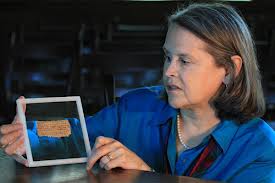
Which seems more likely – Jesus really did have a wife…and we just now are finding out about it even after 2000+ of microscope focus on His life, or the media is being sensational about this papyrus scrap?

Or look at it this way, will you trust six words that are part of an unidentifiable sentence (the other words in the sentence can’t be read) written 300 years after Jesus’ life with no predecessors or successors on a piece of papyrus smaller than a business card more than you trust four harmonious accounts of his life written by eyewitnesses with thousands of early copies? Now I may just be bias, but one side sounds much more credible.

For a more accurate perspective of this newest intrigue with Jesus’ personal life, read this balanced article.

The Far Less Sensational Truth about Jesus’ Wife – by the Gospel Coalition.

If you have no clue what this blog is about and you have been social media deprived this week, here are a few quick links from major sources to catch you up to speed in the recent historical discovery.

ABC News, Fox News, NY Times, The Washington Post

It is my prayer that we will get to know the true Jesus through the pages of scripture more everyday.

Self-Defeating Statements People (Unwittingly) Use Everyday!

“There is no truth!”

How many times have you heard that before?

In their book I Don’t Have Enough Faith to Be an Atheist, authors Norman Geisler and Frank Turek provide one of the most valuable tools and tactics a clear-thinker needs to master and have in their arsenal:

“If someone said to you, ‘I have one insight for you that absolutely will revolutionize your ability to quickly and clearly identify the false statements and false philosophies that permeate our culture,’ would you be interested? That’s what we’re about to do here. In fact, if we had to pick just one thinking ability as the most valuable we’ve learned in our many years of seminary and postgraduate education, it would be this: how to identify and refute self-defeating statements.”(i)

What is a self-defeating statement?

A self-defeating (or self-refuting) statement is one that fails to meet its own standard. In other words, it is a statement that cannot live up to its own criteria. Imagine if I were to say,

I cannot speak a word in English.

You intuitively see a problem here. I told you in English that I cannot speak a word in English. This statement is self-refuting. It does not meet its own standard or criteria. It self-destructs.

The important thing to remember with self-defeating statements is that they are necessarily false. In other words, there is no possible way for them to be true. This is because they violate a very fundamental law of logic, the law of non-contradiction. This law states that A and non-A cannot both be true at the same time and in the same sense. For example, it is not possible for God to exist and not exist at the same time and in the same sense. This would violate the law of non-contradiction. So if I were to say, “God told me He doesn’t exist” you would see intuitively the obvious self-refuting nature of this statement.

How do you expose self-defeating statements?

Simple: you apply the claim to itself. This is what Geisler and Turek call the Road Runner Tactic and what Greg Koukl refers to as The Suicide Tactic (see chapter 7 of his book Tactics).

Below each self-defeating statement is an explanation of why it commits suicide along with suggestions on how you can respond. If this is your first time dealing with self-refuting statements you may need to read them a couple times. Stop and reflect on what the statement is saying and then see if you can identify its self-refuting nature.

1. There is no truth.

If there is no truth this statement itself cannot be true. Therefore, truth exists. You cannot deny truth without affirming it. You might respond, “Is that true?” or “How can it be true that there is no truth?”

2. You can’t know truth.

If you can’t know truth then you would never know that “you can’t know truth.” This person is claiming to know the truth that wecan’t know truth. You might respond, “Then how do you know that?”

3. No one has the truth.

This person is claiming to have the truth that no one has the truth. If no one has the truth then the statement “no one has the truth” is false! You might respond, “Then how do you know that is true?”

4. All truth is relative.

Sometimes also stated as “Everything is relative.” If all truth is relative then this statement itself would be relative and not objectively true. In other words, the person is claiming that it is objectively true that all truth is relative. You might respond, “Isthat a relative truth?”

5. It’s true for you but not for me.

This statement is self-refuting because it claims that truth is relative to the individual and yet at the same time implies it is objectively true that something can be “true for you but not for me.” This statement commits the self-excepting fallacy. You might respond, “Is that just true for you, or is it true for everybody?”

6. There are no absolutes.

This statement is an absolute statement about reality that claims there are no absolutes. You might respond, “Are you absolutely sure about that?”

7. No one can know any truth about religion.

This person is claiming to know the truth about religion and it is this: you can’t know truth about religion. You might respond, “Then how did you come to know that truth about religion?”

8. You can’t know anything for sure.

If you can’t know anything for sure then you would never know it! This person is claiming to know with certainty that you can’t know anything for sure. You might respond, “Then how do you know that for sure?”

9. You should doubt everything.

If you should doubt everything then you should doubt the truth of the statement “you should doubt everything.” You might respond, “Should I doubt that?” And remember: always doubt your doubts!

10. Only science can give us truth.

If only science can give us truth we could never know that “only science can give us truth” because this is not something science can tell you! That is because this statement is philosophical in nature rather than scientific. You might respond, “What science experiment taught you that?” or “What is your scientific evidence that only science can give us truth?”

11. You can only know truth through experience.

If you can only know truth through experience you would never know the truth of the statement “you can only know truth through experience” because this is not something that can be known through experience. You might respond, “Can you know that truth through experience?” or “What experience taught you that?”

12. All truth depends on your perspective.

If all truth depends on your perspective then even the truth “all truth depends on your perspective” depends on your perspective. This is another objective statement which claims relativism is true. Again, it commits the self-excepting fallacy. You might respond, “Does that truth depend on your perspective?”

13. You shouldn’t judge.

The person who says this is making a judgment, namely, that it is wrong to judge! You might respond, “If it is wrong to judge, then why are you judging?”

14. You shouldn’t force your morality on people.

This person is forcing their moral point of view that it is wrong to force a moral point of view. You might respond, “Then please don’t force your moral view that it is wrong to force morality.”

15. You should live and let live.

The person who tells you to “live and let live” isn’t allowing you to live how you want! They are prescribing behavior for you rather than taking their own advice. You might respond, “If that’s your philosophy, why are you telling me how to live?”

16. God doesn’t take sides.

If God doesn’t take sides then He does in fact take the side that doesn’t take sides. You might respond, “Does God take thatside?”

17. You shouldn’t try to convert people.

This person is trying to convert you to their position that it is wrong to convert people! You might respond, “If it is wrong to convert, why are you trying to convert me?”

18. That’s just your view.

This statement is self-refuting if it treats an objective statement as if it were subjective. This is the subjectivist fallacy. The hidden assumption is that your view is relative and a matter of personal opinion. If that is the case, this statement can also be relativized and made into a matter of personal opinion. You might respond, “Well that’s just your view that this is just my view.”

19. You should be tolerant of all views.

Most statements regarding tolerance are self-refuting if by “tolerance” the person means “accepting all views as equally true and valid.” If that is the case, the person who says “You should be tolerant of all views” isn’t being tolerant of your view! You might respond, “Then why don’t you tolerate my view?”(ii)

20. It is arrogant to claim to have the truth.

This person is claiming to have the truth that “it is arrogant to claim to have the truth.” Therefore, by his own standard, he is the arrogant one! You might respond, “My that is awfully arrogant of you!”

_________________________________________________

Why list out these statements?

3 reasons:

So you can (1) recognize self-defeating statements, (2) expose them for what they are, and (3) avoid being caught off guard and taken in by them.
_________________________________________________

(i) Geisler and Turek, I Don’t Have Enough Faith to Be an Atheist, 38.

(ii) Note: true tolerance means “putting up with error” and carries with it the idea of respect and value with regards to persons. This is in contradistinction to the postmodern definition of tolerance which means holding all truth claims as equally true and valid.

Saturdays With C.S. Lewis: Christian Worldview

We all have a lens through which we see and interpret the world around us. Anyone who claims to be “neutral” or to simply “let the facts speak” has a misunderstanding about how reason functions. There must always be a framework, a worldview, through which we package and understand information. C.S. Lewis understood this.

“I believe in Christianity as I believe that the sun has risen: not only because I see it, but because by it I see everything else.”
― C.S. Lewis

He understood that through the reality of Christ we best understand everything else! No really…Everything: from God, spirituality, relationships, finances, self worth, work ethic, parenting, you name it and it is best understood in the light of Biblical Christianity.

The question is, what worldview framework are you working within?

-Adam

Lucy, Australopithecus Afarensis, Seen Through A Biblical Worldview

While at the Creation Museum I had the opportunity to see a representation of the crowning jewel of human evolutionary thought, Lucy. Yet accompanying these bones were not the usual interpretations by modern science. At the Creation Museum, scientists and artists took the biblical worldview as a guide to understanding these bones. From personal experience, it was stunning. It was an amazing visual backed up by solid facts. This is one exhibit everyone should go out of their way to see, creationists and evolutionists alike. Below is a section of an article describing this monumental exhibit.

***

Using the latest in holographic technology, the Creation Museum, as a part of its fifth anniversary celebration, has opened a new high-tech exhibit on human origins last Saturday [May 26, 2012]. With striking holograms, this state-of-the-art exhibit is designed to expose the scientific bankruptcy of the evolutionary interpretation of the famous so-called ape-woman “Lucy.”

Perhaps more than any other fossil, Lucy is presented as “exhibit A” for evolutionists in their attempt to show that humans evolved from an ape-like ancestor. Through the scientific research of the Creation Museum’s Dr. David Menton (PhD, biology, Brown University) and the artistic talents of Doug Henderson and his crew, the museum has created a stunning holographic refutation of Lucy. (The technical name for this Lucy creature found in Africa is Australopithecus afarensis.)

“I expect that scientists, both evolutionists and creationists, will make a trip to the Creation Museum to see this exceptional exhibit, not only because it refutes Lucy as an ancestor of ours, but also due to its use of remarkable holographic technology,” declared Ken Ham, president of Answers in Genesis and the museum.

In a highly visual way, the exhibit conclusively shows that the fossil bones of Lucy belong to a knuckle-walking, ape-like creature. Menton points out that many evolutionists such as the well-known researcher Donald Johanson, the discoverer of “Lucy,” admit that Lucy’s V-shaped mandible was very ape-like, nothing like that of a human. In addition, Israeli scientists reported in the Proceedings of the National Academy of Science that it may not be our ancestor, for its lower jaw bone resembles a gorilla’s.

In the new museum exhibit, a number of Lucy heads have been created, cast from the same mold. Each head, however, is given different skin and eye coloration, as well as variations in the amount and color of hair. This was done to demonstrate how significant artistic license can be employed by researchers in interpreting what Lucy resembled as they “put flesh to the bones” of the creature. There simply isn’t enough information found in the fossil bones for anyone to determine what Lucy looked like.

“An imagination-rich artist can have a very powerful influence over what the viewer concludes about the evidence presented,” Menton observed. “That is one reason why our Lucy exhibit is placed in an area of the museum that demonstrates to visitors that a person’s starting point, or bias, influences their views.”

“Ultimately, with this excellent display, we want to show museum guests, once and for all, that this knuckle-walking creature needs to be discarded as a ‘missing link’ in human evolution,” Menton concluded.

Designer Henderson described the technology used in the exhibit, “We have used holograms of the actual bone models of Lucy, as opposed to simply exhibiting a 3D physical model. Holographers tell us this is the first time they have seen holography used to take a virtual ‘look inside’ a creature for the public to view. I call it a 3D X-ray.”

Every few months, the Creation Museum (located west of the Cincinnati Airport) adds new exhibits to present the case for the Bible’s authority and accuracy, including creation. Last year, Menton’s striking exhibit on homology—comparing humans to apes (and to other creatures)—used the technology of lasers to point out the differences between humans and animals. Menton’s latest exhibit may create even more of a stir in the origins debate, for Lucy is treated with near reverence by some scientists.

The Heavens Declare the Glory of God

Last week I had the privilege of touring the Creation Museum in Petersburg KY. A highlight of that tour was the planetarium show describing the immense size of our universe. Watch the video below to see the high level of quality at which the Creation Museum functions. Dr. Jason Lisle describes how this planetarium is using the best technology available to teach that the biblical worldview has the best answers for how our universe got here and why it is the way is.

Check out this interactive site that lets you scroll through the size of various objects in relation to each other. It helps us get a grasp on the intricacies of this world and beyond. We can zoom in to see the tiniest of matter and zoom out to see galaxies and beyond.  http://scaleofuniverse.com  Check it out, it is cool.

All of this boils down to one point in my perspective. If this world and beyond is all about us, it is a colossal waste of space. But if this universe is all about the Creator, it is just about the right the right size. If the universe around us is a parable for the awesomeness, the power, the grandeur of God, then it is speaking clearly to us about who He is.

Here is Tim Challies article on the subject. How Big is the Universe? I love the use of scripture to help us understand the world around us.

http://youtu.be/UbvSLWzDiJg

Psalms 19

The heavens declare the glory of God;
the skies proclaim the work of his hands.
Day after day they pour forth speech;
night after night they display knowledge.
There is no speech or language
where their voice is not heard.[a]
Their voice[b] goes out into all the earth,
their words to the ends of the world.

Saturdays With C.S. Lewis: A Moral Law Beyond Ourselves

If the Moral Law was one of our instincts, we ought to be able to point to some one impulse inside us which was always what we call ‘good,’ always in agreement with the rule of right behaviour. But you cannot. There is none of our impulses which the Moral Law may not sometimes tell us to suppress, and none which it may not sometimes tell us to encourage. It is a mistake to think that some of our impulses–say mother love or patriotism–are good, and others, like sex or the fighting instinct, are bad. All we mean is that the occasions on which the fighting instinct or the sexual desire need to be restrained are rather more frequent than those for restraining mother love or patriotism. But there are situations in which it is the duty of a married man to encourage his sexual impulse and of a soldier to encourage the fighting instinct. There are also occasions on which a mother’s love for her own children or a man’s love for his own country have to be suppressed or they will lead to unfairness towards other people’s children or countries. Strictly speaking, there are no such things as good and bad impulses. Think once again of a piano. It has not got two kinds of notes on it, the ‘right’ notes and the ‘wrong’ ones. Every single note is right at one time and wrong at another. The Moral Law is not any one instinct or set of instincts: it is something which makes a kind of tune (the tune we call goodness or right conduct) by directing the instincts.

~C.S. Lewis, Mere Christianity, Chapter 2 (1952)

Best Arguments Against Theism?

This is Greg Koukl. He is the founder of Stand to Reason, an organization committed to a clear articulation and defense of the Christian worldview. He is a crisp thinker and a good communicator.

Here is 5.5 minutes of informative video on what the best argument against theism may be. One great snippet from the video is that atheists don’t ague to much on this point because they “think” it is settled. They believe they are the majority position when in actuality 98% of the WORLD population is theistic. Less than 2% really holds that there is no God. Interesting. Check out the video and learn about defending your faith.

Thanks Greg for being a stand up guy. I’d like to shake your hand someday.

Beauty – A Compass Pointing to Something Bigger

In this flashmob organized in Sabadell, Spain an unsuspecting courtyard is bombarded with beauty as an orchestra slowly materializes out of thin air with a majestic rendition of Beethoven’s 9th symphony. It is moving and powerful. A crowd develops around the musicians realizing they are beholding something rare and beautiful. Children are dancing, adults are swaying, everyone is captivated by the beauty of the moment. Time stands still.

In the middle of busy schedules why did these people stop to listen? I believe it is rooted in our innate yearning for beauty. John Piper describes this desire that is in every person.

“I do believe that deeply rooted in every human heart is a longing for beauty. Why do we go to the Grand Canyon, the Boundary Waters, art exhibits, gardens? Why do we plant trees and flower beds? Why do we paint our inside walls? Why is it man and not the monkeys who decorated cave walls with pictures? Why is it that in every tribe of humans ever known there has always been some form of art and craftsmanship that goes beyond mere utility? Is it not because we long to behold and be a part of beauty? We crave to be moved by some rare glimpse of greatness. We yearn for a vision of glory.”

We long for something bigger than ourselves. Whether that is in the arts, nature, or daily life, when we catch a glimpse of it we stop in wonder. We realize there is more to this life than what we can see. We seek out beauty because we are created to have a relationship with the Author of beauty. Because of image of God imprinted in us, all humanity has a void in our souls that resonates with true beauty. This resonation of beauty lures us to its source. When we behold beauty it acts like a compass. It points us beyond the momentary glimpse of beauty to the source of all beauty. The compass does not show us our destination, it is just a guide. It keeps us grounded in reality, understanding where we are in this world. The sunset and the orchestra in themselves leave us wanting. They are not the destination. While they are beautiful for a moment, we desire more than these things can offer.

“And we can know that our desires are remnants of this urge for God because everything less than God leaves us unsatisfied. He alone is the All-Satisfying Object of Beauty. Only one vision will be sufficient for our insatiable hearts—the glory of God. For that we have been made. And it is for this we long, whether we know it or not.”    -John Piper: Jesus is Precious because We Yearn for Beauty. (both quotes)

When you and I encounter moments that take our breath away, whether a sunset or a work of Beethoven, let it remind us that, yes, there are amazingly beautiful things in this world, but they are mere shadows of the true beauty that is God Himself. How do we get to know God? Through His Son – Jesus Christ.

Your fellow worker in the field,  Adam

Saturdays with C.S. Lewis: Liar, Lunatic, or Lord?

C.S. Lewis has a way with words that cut to the heart. He speaks plainly, but powerfully. In a concise bit of logic Lewis reminds us that the claims of Christ leave very limited options for us in our response. Who do you say Jesus is? Does that correspond to who He said he was? While this argument has been retold many times since Lewis set the stage, read his words anew and allow them to challenge you.

“I am trying here to prevent anyone saying the really foolish thing that people often say about Him: I’m ready to accept Jesus as a great moral teacher, but I don’t accept his claim to be God. That is the one thing we must not say. A man who was merely a man and said the sort of things Jesus said would not be a great moral teacher. He would either be a lunatic — on the level with the man who says he is a poached egg — or else he would be the Devil of Hell. You must make your choice. Either this man was, and is, the Son of God, or else a madman or something worse. You can shut him up for a fool, you can spit at him and kill him as a demon or you can fall at his feet and call him Lord and God, but let us not come with any patronizing nonsense about his being a great human teacher. He has not left that open to us. He did not intend to.”

Your fellow worker in the field, Adam