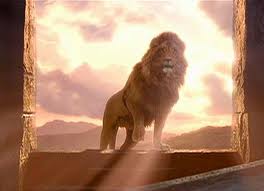
Saturdays with C.S. Lewis – Diminishing The Glory Of God?

Those Divine demands which sound to our natural ears most like those of a despot and least like those of a lover, in fact marshal us where we should want to go if we knew what we wanted. He demands our worship, our obedience, our prostration. Do we suppose that they can do Him any good, or fear, like the chorus in Milton, that human irreverence can bring about ‘His glory’s diminution’? A man can no more diminish God’s glory by refusing to worship Him than a lunatic can put out the sun by scribbling the word ‘darkness’ on the walls of his cell. But God wills our good, and our good is to love Him (with that responsive love proper to creatures) and to love Him we must know Him: and if we know Him, we shall in fact fall on our faces.

C.S. Lewis, The Problem of Pain (New York: HarperCollins Publishers, 1996), pp. 46-47.

Saturdays with C.S. Lewis: Salt & Light

But you must not imagine that the new men are, in the ordinary sense, all alike. A good deal of what I have been saying in this last book might make you suppose that that was bound to be so. To become new men means losing what we now call ‘ourselves’. Out of our selves, into Christ, we must go. His will is to become ours and we are to think His thoughts, to ‘have the mind of Christ’ as the Bible says. And if Christ is one, and if He is thus to be ‘in’ us all, shall we not be exactly the same? It certainly sounds like it; but in fact it is not so.
It is difficult here to get a good illustration; because, of course, no other two things are related to each other just as the Creator is related to one of His creatures. But I will try two very imperfect illustrations which may give a hint of the truth. Imagine a lot of people who have always lived in the dark. You come and try to describe to them what light is like. You might tell them that if they come into the light that same light would fall on them all and they would all reflect it and thus become what we call visible. Is it not quite possible that they would imagine that, since they were all receiving the same light, and all reacting to it in the same way (i.e. all reflecting it), they would all look alike? Whereas you and I know that the light will in fact bring out, or show up, how different they are.Salt & Light

Or again, suppose a person who knew nothing about salt. You give him a pinch to taste and he experiences a particular strong, sharp taste. You then tell him that in your country people use salt in all their cookery. Might he not reply ‘In that case I suppose all your dishes taste exactly the same: because the taste of that stuff you have just given me is so strong that it will kill the taste of everything else.’ But you and I know that the real effect of salt is exactly the opposite. So far from killing the taste of the egg and the tripe and the cabbage, it actually brings it out. They do not show their real taste till you have added the salt. (Of course, as I warned you, this is not really a very good illustration, because you can, after all, kill the other tastes by putting in too much salt, whereas you cannot kill the taste of a human personality by putting in too much Christ. I am doing the best I can.)
It is something like that with Christ and us. The more we get what we now call ‘ourselves’ out of the way and let Him take us over, the more truly ourselves we become. There is so much of Him that millions and millions of ‘little Christs’, all different, will still be too few to express Him fully.

C.S. Lewis, Mere Christianity (1952; Harper Collins: 2001) 223-225.

Saturdays with C.S. Lewis: Why the Next Generation is Rejecting Christianity

If we had noticed that the young men of the present day found it harder and harder to get the right answers to sums, we should consider that this had been adequately explained the moment we discovered that schools had for some years ceased to teach arithmetic. After that discovery we should turn a deaf ear to people who offered explanations of a vaguer and larger kind — people who said that the influence of Einstein had sapped the ancestral belief in fixed numerical relations, or that gangster films had undermined the desire to get right answers, or that the evolution of consciousness was now entering on its post-arithmetical phase. Where a clear and simple explanation completely covers the facts no other explanation is in court.  If the younger generation have never been told what the Christians say and never heard any arguments in defence of it, then their agnosticism or indifference is fully explained. There is no need to look any further: no need to talk about the general intellectual climate of the age or the influence of mechanistic civilization on the character of urban life. And having discovered that the cause of their ignorance is lack of instruction, we have also discovered the remedy. There is nothing in the nature of the younger generation which incapacitates them for receiving Christianity. If any one is prepared to tell them, they are apparently ready to hear.

C.S. Lewis, “On the Transmission of Christianity,” God in the Dock 115  (London, 1946).

Saturdays with C.S. Lewis: Dying to Self

But there must be a real giving up of the self. You must throw it away ‘blindly’ so to speak. Christ will indeed give you a real personality: but you must not go to Him for the sake of that. As long as your own personality is what you are bothering about you are not going to Him at all. The very first step is to try to forget about the self altogether. Your real, new self (which is Christ’s and also yours, and yours just because it is His) will not come as long as you are looking for it. It will come when you are looking for Him. Does that sound strange? The same principle holds, you know, for more everyday matters. Even in social life, you will never make a good impression on other people until you stop thinking about what sort of impression you are making. Even in literature and art, no man who bothers about originality will ever be original: whereas if you simply try to tell the truth (without caring twopence how often it has been told before) you will, nine times out of ten, become original without ever having noticed it. The principle runs through all life from top to bottom. Give up yourself, and you will find your real self. Lose your life and you will save it.
Submit to death, death of your ambitions and favourite wishes every day and death of your whole body in the end: submit with every fibre of your being, and you will find eternal life. Keep back nothing. Nothing that you have not given away will be really yours. Nothing in you that has not died will ever be raised from the dead. Look for yourself, and you will find in the long run only hatred, loneliness, despair, rage, ruin, and decay. But look for Christ and you will find Him, and with Him everything else thrown in.

C.S. Lewis, Mere Christianity (1952; Harper Collins: 2001) 223-225.

Saturdays with C.S. Lewis: What are we to make of Christ?

“What are we to make of Christ?” There is no question of what we can make of Him, it is entirely a question of what He intends to make of us. You must accept or reject the story.


C.S. Lewis, “What are we to make of Jesus Christ?” (originally published 1950; this edition from The Essential C.S. Lewis (Touchstone, 1996)) 331.

Saturdays with C.S. Lewis: No Fluff Words Needed

And now we begin to see what it is that the New Testament is always talking about. It talks about Christians ‘being born again’; it talks about them ‘putting on Christ’; about Christ ‘being formed in us’; about our coming to ‘have the mind of Christ’.
Put right out of your head the idea that these are only fancy ways of saying that Christians are to read what Christ said and try to carry it out—as a man may read what Plato or Marx said and try to carry it out. They mean something much more than that. They mean that a real Person, Christ, here and now, in that very room where you are saying your prayers, is doing things to you. It is not a question of a good man who died two thousand years ago. It is a living Man, still as much a man as you, and still as much God as He was when He created the world, really coming and interfering with your very self; killing the old natural self in you and replacing it with the kind of self He has. At first, only for moments. Then for longer periods. Finally, if all goes well, turning you permanently into a different sort of thing; into a new little Christ, a being which, in its own small way, has the same kind of life as God; which shares in His power, joy, knowledge and eternity.

C.S. Lewis, Mere Christianity (1952; Harper Collins: 2001) 191-192.

Saturdays With C.S. Lewis: We All Make Excuses

It seems, then, we are forced to believe in a real Right and Wrong. People may be sometimes mistaken about them, just as people sometimes get their [math] wrong; but [Right and Wrong] are not a matter of mere taste and opinion any more than the multiplication tables… I hope you will not misunderstand what I am going to say. I am not preaching, and Heaven knows I do not pretend to be better than anyone else. I am only trying to call attention to a fact; the fact that this year, or this month, or, more likely, this very day, we have failed to practise ourselves the kind of behaviour we expect from other people. There may be all sorts of excuses for us. That time you were so unfair to the children was when you were very tired.That slightly shady business about the money—the one you have almost forgotten—came when you were very hard-up. And what you promised to do for old So-and-so and have never done—well, you never would have promised if you had known how frightfully busy you were going to be. And as for your behaviour to your wife (or husband) or sister (or brother) if I knew how irritating they could be, I would not wonder at it—and who the dickens am I, anyway? I am just the same. That is to say, I do not succeed in keeping the Law of Nature very well, and the moment anyone tells me I am not keeping it, there starts up in my mind a string of excuses as long as your arm. The question at the moment is not whether they are good excuses. The point is that [these excuses] are one more proof of how deeply, whether we like it or not, we believe in the Law of Nature. If we do not believe in decent behaviour, why should we be so anxious to make excuses for not having behaved decently?

C.S. Lewis, Mere Christianity (1952, this edition: 2001) 7-8.

Saturdays With C.S. Lewis: Screwtape Refuting Prayer

My dear Wormwood,

But since your patient has contracted the terrible habit of obedience, he will probably continue such ‘crude’ prayers whatever you do. But you can worry him with the haunting suspicion that the practice is absurd and can have no objective result. Don’t forget to use the ‘heads I win, tails you lose’ argument. If the thing he prays for doesn’t happen, then that is one more proof that petitionary prayers don’t work; if it does happen, he will, of course, be able to see some of the physical causes which led up to it, and ‘therefore it would have happened anyway’, and thus a granted prayer becomes just as good a proof as a denied one that prayers are ineffective.

Your affectionate uncle,
SCREWTAPE

C.S. LewisThe Screwtape Letters (originally 1942; this edition: Harper Collins, 1996) 148.

Saturdays With C.S. Lewis: Christian Worldview

We all have a lens through which we see and interpret the world around us. Anyone who claims to be “neutral” or to simply “let the facts speak” has a misunderstanding about how reason functions. There must always be a framework, a worldview, through which we package and understand information. C.S. Lewis understood this.

“I believe in Christianity as I believe that the sun has risen: not only because I see it, but because by it I see everything else.”
― C.S. Lewis

He understood that through the reality of Christ we best understand everything else! No really…Everything: from God, spirituality, relationships, finances, self worth, work ethic, parenting, you name it and it is best understood in the light of Biblical Christianity.

The question is, what worldview framework are you working within?

-Adam

Saturdays with C.S. Lewis: Fix Your Eyes on the King

***Context for this passage: Lucy, the youngest of the siblings has claimed to see Aslan, but no one else can see Him. She is explaining that Aslan will lead them if they will follow her as she follow Him.***

“He’s beating his paw on the ground for us to hurry,” said Lucy. “We must go now. At least I must.”
“You’ve no right to try to force the rest of us like that It’s four to one and you’re the youngest,” said Susan.
“Oh, come on,” growled Edmund. “We’ve got to go…”
“On the march, then,” said Peter…

Susan was the worst “Supposing I started behaving like Lucy,” she said. “I might threaten to stay here whether the rest of you went on or not I jolly well think I shall.”  “Obey the High King, your Majesty,” said Trumpkin, “and let’s be off…”

And so at last they got on the move. Lucy went first, biting her lip and trying not to say all the things she thought of saying to Susan. But she forgot them when she fixed her eyes on Aslan. He turned and walked at a slow pace about thirty yards ahead of them. The others had only Lucy’s directions to guide them, for AsIan was not only invisible to them but silent as well. His big cat-like paws made no noise on the grass.

He led them to the right of the dancing trees—whether they were still dancing nobody knew, for Lucy had her eyes on the Lion and the rest had their eyes on Lucy—and nearer the edge of the gorge.

C.S. Lewis, Prince Caspian: The Return to Narnia The Chronicles of Narnia (1951, this edition Harper Collins, 1994) 148-149.

************************************************

Keep you eyes fixed on the King today!

2 Cor. 4:17-18   For our light and momentary troubles are achieving for us an eternal glory that far outweighs them all. So we fix our eyes not on what is seen, but on what is unseen, since what is seen is temporary, but what is unseen is eternal.

Hebrews 12:1-2  Therefore, since we are surrounded by such a great cloud of witnesses, let us throw off everything that hinders and the sin that so easily entangles. And let us run with perseverance the race marked out for us, fixing our eyes on Jesus, the pioneer and perfecter of faith. For the joy set before him he endured the cross, scorning its shame, and sat down at the right hand of the throne of God.

Your fellow worker in the field, Adam