Social Media Boundaries for Student Ministry Workers

social mediaLets face it, social media is part of life. It is a two edged sword if you are not careful how it is handled. When working with teenagers we have an added responsibility to model how to live and act, even in the online forum. I ran across this helpful article by Phil Bell of Youthworktalk.com and forwarded it on to my small group leaders. Here are his wise suggestions for some boundaries regarding the powerful tool of social media.

___________________________________________________________________________________________

Here are 5 social media boundaries for you as you go about your youth ministry:

1) Accept that leaders live in ‘glass house.’ This is hard to accept, but when you are in ministry and you are using social media, it automatically means that you are under the spotlight. Leaders, parents, and students are looking up to you and will often follow you for inspiration, guidance, and hope. On the other hand, others will follow you to get an inside track to see whether you fit their mold of an acceptable youth worker.

Like it or not, the reality is that a leader is always watched closely. What are others seeing?

2) Wait to be Friended or Followed: If you don’t know a student well, wait for them to friend or follow you. I know this might seem a little extreme, but unless I know a student quite well, I will wait for them to friend me. If there is a student in your ministry who is new and getting plugged in, it might be worth waiting for them to friend you. Waiting for a student to ‘friend’ you simply avoids any weirdness and ensures they are happy for you to get an inside track to their life.

3) Avoid Private Conversations: Avoid private messaging students. Try to keep messages public and for all to see. If a student wants to talk to you about an issue or a problem, try to do it face to face in full site of others. It’s also essential to communicate with parents that you are talking to their student. I know this might seem a little over the top, but here are two good reasons why contacting parents is a good idea:

  • It opens the door for a relationship to partner with parents.
  • It avoids parents wondering what your intentions are. In this day and age, parents are protective when other adults contact their kids, and rightly so. Honor parents by touching base and letting them know who you are.

4) Consider carefully what you post: Here are three things that can get you in trouble.

  • Questionable pictures: In certain social media platforms such as Facebook, you can create a setting that gives you the option to ‘allow’ pictures you are tagged in. Ensure that the pictures of you will always allow others to see you in a positive light.
  • Complaints: Complaining about others simply does not look good. It shows weakness that we can’t talk to the person directly as well as modeling a poor method of dealing with conflict.
  • Controversial Issues: For me I don’t post  anything that could divide people in my church. Political statements, local controversies, and attacks on political leaders should be avoided.

In what you post, would others describe you as a  divisive and opinionated person, or a inspirational leader? 

5) Leverage social media to inspire and uplift:  This should be a given, but many of us have discounted the great value of regularly posting to inspire others. As I said at the beginning of this post. People are looking for hope and direction. Consider what influence you can have by using social media effectively?


5 Reasons I Write My Own D-Now Curriculum

dnow
The Band has been rockin’, the speaker has been bringing the Word. Disciple-Now is in full swing this weekend for my ministry. The students just finished up a video scavenger hunt and have gone to a few hours of free time before our next session. In this moment to breathe I have decided to type up a quick blog on some of my methods. It was on my mind last night when I couldn’t sleep because I was thinking of all the details for the next day. If you work with teenagers, I hope this encourages you to take your next event to the next level.

Here are 5 reasons why I write my own material for event weekends like Disciple Now.

  1. It’s Free– When paying for a band and a speaker, hotel rooms, small group leaders, travel expenses, and the list goes on, here is an area I can save money. If you preach every Wednesday anyway, this is not very different study-wise, other than I just give the material to someone else to teach. By writing my own material I can maximize the funds toward keeping the cost low for the students. This year I charged $10. Bam. Success. There are lots of students who don’t participate in camps and retreats because it costs 100s of dollars. This is an event I want any and every teen to be able to come to. A little more work on my end helps keep it that way.
  2. Be Theologically Rich– Even though it is free, that doesn’t mean when you write your own material it will be lame! I make sure we tackle deep subjects and dive into the theological deep end! When you purchase a pre-packaged curriculum you do not know the theological leanings of the writer or the depth to which they will challenge your students. I want my students to have the best, so why would I leave that up to an unknown author? This weekend we are looking at Ephesians 3 – a theological treasure trove! Oh yeah!
  3. The Exegetical Approach–  On the heels of #2, I really believe every verse in scripture is important for believers. If that is true I want to instill that into my teenagers. When we take a whole weekend to unpack a single chapter of the bible, that is one message that is communicated. Also when you systematically approach a text, it makes it easier to see the bigger picture the author intended to communicate. I believe this also provides cohesiveness to the weekend. Each time we gather the students know where to turn in their bibles. I have not found any national chain producing exegetical material for events like this, possibly with the exception of Global Youth Ministry, but then again, refer to point #1.
  4. I know my group– When you write your own material you can tailor it for your specific group. While God can use anything and anyone to speak through, I doubt that same d-now material being used by 43 other churches this weekend can intentionally speak to the subtleties of a specific group better than a prayerful pastor who spends every week with them. So why not use a weekend to address what you want to see happen! It helps when another voice comes in and says the same things you have been saying all along.
  5. Graphics don’t have to be intimidating– “I cant make great looking flyers and promo material!?!” For real, don’t be scared, you can. Here are two things that make life super easy when it comes to promoting your event. Cool Fonts and Stock Photos. Combining these make great stuff.  My d-now was themed “The Mystery”, below is a cool stock photo and a cool font to title it. Bam, easy promotion. Sites I uses for photos are istockphoto.com and Bigstockphoto.com. Make an account and spend a few buck on a high res picture with no copy right issues for your next event. Then go to dafont.com or just google “free fonts” and get some fonts that really add depth to your flyer.  It’s not that hard and for a couple bucks you can have a professional looking flyer/promo that corresponds to your personalized material.

I hope these thoughts help as you plan your next d-now or retreat weekend! Pray for me as we wrap up ours! May God be glorified by your efforts!

-Adam

mystery image

Bible Says: Teenagers need to SLOW DOWN!

sleepy

The idea of rest is maybe the last thing on a teenagers mind, but there is a biblical command for all of us to slow down and recharge. This can be wholly lost in the demands of a teen life filled with academics, sports practice, dating, family, not to mention church life. Here is a great article that all parents of teens need to read. Its provides some practical suggestions for raising a teen that understand the importance of slowing down. Read the original article HERE by Jen Wilkin, writing for The Gospel Coalition. I took the liberty of bolding a few things that jumped out to me. Read it!         -Adam

How to Guard Sabbath for Your Children

My oldest son started high school this fall. At his orientation the counselors spoke to parents about the greatest challenge they see students face in school. I expected to hear about poor study habits or substance abuse, but to my initial surprise, these were not at the top of the list. Apparently, the greatest challenge presenting itself in the office of the high school guidance counselor is a growing number of kids struggling with anxiety and depression. Can you guess why? A combination of over-scheduling and sleep deprivation, linked to two main contributors: electronics use and extracurricular activities. We were encouraged as parents to go home and talk to our teenagers about setting boundaries in these areas. Parents across the auditorium scribbled notes furiously as the counselors outlined some suggestions: limit texting, monitor bedtimes, cut back on team practices. I couldn’t help but think to myself: tonight there will be many demonstrations of teenage angst when mom shows up with her new list of suggestions.

What is unfolding at my son’s high school is a clear illustration of spiritual truth: the need for regular periods of rest in our lives. From the earliest pages of the Bible we find God instituting patterns of activity and rest—not just any kind of rest, but rest with the intent to engage in worship and community. The concept of Sabbath weaves its way through the Old Testament and the New, occupying a prominent place among the Ten Commandments and informing our understanding of heaven.

Despite biblical precedent, few Christians understand or practice Sabbath as a regular part of life, and consequently, neither do their children. Christian parents bear the responsibility of teaching our children the value of rest, through our words and through our actions. Children don’t set the calendar in our homes—if they are overscheduled or sleep-deprived, the fault lies with us. How can we better discharge our duty of raising children to seek Sabbath? To value down-time to reconnect with God and family?

While I admire the high school guidance counselors’ optimism, age 14 is probably too late to start imposing boundaries on our child’s rest habits and schedule. We need a plan, and we need it early. How will we safeguard for our families the key Sabbath concepts of rest, worship, and community? Here are a few suggestions that have helped our family to honor God in our rest.

Electronics

Late-night texting and TV watching, online chatting, surfing the internet—all can rob a child of rest. Children between the ages of 7 and 12 require a whopping 10 to 11 hours of sleep each night. This is the very age range during which most acquire the electronics to rob them of needed sleep. Parents can guard their children’s rest simply by keeping electronics in sight. We made a rule in our home that no electronics are allowed upstairs: no TVs, computers, phones, or games in bedrooms or rooms where their use cannot be monitored.

Each night, those of us who have phones leave them in a spot on the kitchen counter. These measures give us accountability to each other, keep electronics as a shared rather than an individual privilege, and force our electronics to obey our family’s Sabbath priorities of rest, worship, community. Well-rested kids bypass many of the unsavory habits of their tired counterparts: fits, backtalk, forgetfulness, drama, isolation, and yes—anxiety and depression. Guarding your child’s rest actually gives them a running start at Christlike behavior, even during adolescence.

Activities

So many to pursue, so little time. Don’t be fooled: the proliferation of activity options for children reflects our cultural affluence, not our child’s need to be well-rounded or socialized. Gobs of money are being made off of our misplaced desire to expose our kids to every possible talent path. How can we choose activities for our family in a way that doesn’t compromise Sabbath principles?

Because the four Wilkin kids are close in age, our schedule and finances forced us to limit activities to “one or none” for each child. Not all families need to impose a limit this low, but we have re-learned something our grandparents probably knew: children who participate in no organized activities at all still lead lives full of activity and joy. To many parents the idea of a child on no sports team, in no music lessons, at no club meetings is completely foreign and a little frightening. Won’t they get bored? Won’t they drive me crazy lurking around the house? Won’t they miss out on an NFL career and blame me? Or, my personal favorite: Won’t other parents think I’m a bad parent? I would answer all of these questions, “Maybe, but who cares?”

As is often lamented, parenting is not a popularity contest. With that in mind, here are some good (and highly unpopular) questions to ask when evaluating which activity to pursue:

  1. Does it sabotage weekend downtime or worship?
  2. Does it sabotage family dinners?
  3. Does it sabotage bedtime?
  4. Does it pull our family apart or push us together?
  5. Is it an activity my child can enjoy/benefit from into adulthood?
  6. Can we afford it?

Notice that “Does my child enjoy it?” is not on the list. So often I hear parents justify keeping a child in a time-sucking activity because “He loves it so much.” Kids love Skittles and Mario Kart so much, but they don’t get to decide if, when, and how much to consume. Because children possess a limited range of life experience, it is difficult for them to conceive of happiness outside their current circumstance. It is our job to help them learn.

Less-than-Admirable Motives

Why do we have such a hard time as parents placing limits on electronics and activities? Both can appeal to parents for less-than-admirable reasons. Both can serve as a babysitter or a diversion. But the appeal of activities extends even further, to our very identity as parents. We actually want to be labeled “soccer mom” on rhinestone-studded tee shirts and coffee mugs. We carefully arrange our car decals so that every identity-marker is announced. The thought of removing or withholding our child from an activity threatens the very way we view ourselves.

Maybe our view needs to adjust to something a bit higher. Families that prioritize Sabbath fix their eyes on and find their identity in Christ, recognizing that their greatest potential for missed opportunity lies not in neglecting activities but in neglecting time—lots of it—spent together as a family in worship, rest, and community with each other.

God forbid we value the discipline of a sport more than the discipline of Christian living. Both require great application of time and effort, but one is worth far more than the other. Because time is our most limited resource, how we allocate it reveals much about our hearts. Our time usage should look radically different than that of the unbelieving family. We must leave time for slow afternoons, for evening meals where we pray together and share our faith and struggles, for Sunday mornings of shared worship.

God ordains Sabbath for our good and for his glory. May our homes be places where Sabbath rest is jealously guarded, that in all things God might have preeminence—even our schedules.

Ephesians 5:15-17: See then that you walk circumspectly, not as fools but as wise, redeeming the time, because the days are evil. Therefore do not be unwise, but understand what the will of the Lord is.

Train Up the Next Generation

Here is a fantastic article focused on a glaring deficiency among pastors, and really all believers. We can get so fixed on running “my race” for God in the day to day grind that we forget there is a biblical mandate to guide the next generation into maturity. If we don’t do it who will?

Writing for DesiringGod.org, Mike Bullmore posts “Brothers, Train Up the Next Generation” as a reminder to this very fact.  Check out the article to get a great perspective of the need and solution.

Here are his main points, but go read the full article:

  1. Disciple Faithful Men: Paul is used as a rubric here. Do you have a Timothy?
  2. Beware the Hezekiah Syndrome: After God grants 15 years of “added” life to the sick king, he goes off and parades Israel’s riches before Babylon, Isaiah prophecies coming captivity, but Hezekiah is content that there will be peace in his lifetime. (aka, sorry next gen, but at least I’m ok.)
  3. Avoid Temporal Shortsightedness: it is easy to think only about the here and now, but the coming glory is always a key element in biblical living.
  4. Cultivate a Far-seeing Vision: Contrast Hezekiah with Paul. It take intentionality and devotion, but it is our responsibility.
  5. Invest in the Next Gospel Generation: 1) be personally devoted to Gospel ministry, 2) Notice those who rise to the top, 3) create context for youth to “practice” handling the Word, 4) Pray intentionally for God to raise up passionate hearts, pray for your replacement.

7 Insights To Make Your Internship Count

I had the privilege of being an intern during my years at Union University. While that was over a decade ago now those formative experiences as an intern were me cutting my teeth in ministry. I will always think fondly of Northbrook Church and the ways I was stretched to do and be more than I ever thought I could. It is cool to reconnect with those relationships that grew from those years. Whether it is the pastors of the church, my fellow interns, or the student (who are grown with kids of their own now) I am reminded how what really matters in ministry is relationships built for the glory of God.

Below are seven great insights by Ryan Kearns of the Resurgence Blog, on how to make the intern experience as beneficial as possible. It doesn’t matter if you are the intern or the boss, in ministry or business, read through these and click the scriptural references to see the biblical backing.

One of my mentors during those formative years always used to say, “you pay your dues upfront”. I have found that to be true the older I get and it is a constant reminder that the best is yet to come!

Happy Interning!

***************************************

Looking back on my experience years ago as an intern and hearing the stories of many others, I have come to see seven critical things that make all the difference in how the intern experience plays out.

1. HAVE HUMILITY

It is impossible to be taught anything when you think you already know everything (Prov. 11:2). While the leader in you may struggle at times with the methods of the leaders you are interning under, remember this is a time for you to learn and serve, not direct. It is important to keep in mind that the Lord is teaching you a posture of how to serve and submit to authority, more than teaching you how to lead a ministry (1 Peter 5:5). Humility is often the key formative matter that the Lord wants to cultivate in you, so you may flourish over the long haul in ministry.

2. BE A GENERALIST, NOT A SPECIALIST

While you may intern in a specific area or department, keep in mind that you are there to serve the whole church. At times you may be asked to serve in ways you did not expect. Don’t worry as much about what your role is, but rather where you can be of service. The best interns are looking to get exposure and learn as much as they can about all of the church and her mission. This leads to the next point.

3. IT’S ALWAYS YOUR JOB

Be ready to take on any task as an intern. Keeping this attitude will prevent you from getting bitter or grumbling when something is asked of you that you don’t want to do. “It’s not my job” should never be a phrase that comes out of your mouth when your leaders have a need. Besides, being a person who can get things done and is known as such will serve you well for the rest of your life and ministry (Col. 3:23–24).

4. TALK ABOUT EXPECTATIONS

Know what is expected of you, and communicate what you are expecting. The frustrations of many interns come from having unrealistic or vague expectations of what their internship will look like. You will likely not be preaching regularly, setting the vision for the church, or making important church-wide decisions. Write out what your expectations are and find out if they are realistic.

5. GET FEEDBACK

There is nothing more painful and at the same time beneficial as honest feedback (Prov. 27:6). Yet many avoid it because they just don’t want to hear it. You must know that it is through critical feedback that your greatest growth is (Prov. 19:20). If you are serious about becoming a leader, finding out how God has wired you, and getting to where God wants you, then you will be dogmatic in asking for brutally honest feedback—and not just asking once, but constantly.

6. HAVE A SENSE OF SELF-AWARENESS

Out of getting good feedback should come the most underrated leadership quality of all: self-awareness. Your internship is a prime opportunity to truly be honest about who you are and who you aren’t (Rom. 12:3). Let your leaders, the experiences you are having, and the voices of community chime in during your internship to reveal to you what you are actually good at, not what you want to be good at. Self-awareness is growing in contentment with the gifts that God has actually given you and not dwelling on the gifts you wish he did. God did not get it wrong when he gave you the gifts he gave you.

7. OWN IT

And if you really want to catapult your self-awareness through feedback, then own your development and initiate the conversations and relationships that you need to. Often, an intern can feel like he or she is not being developed or poured into, and while that may be the case, take responsibility for your own development and seek out the leaders, books, and people you need to learn from. This will be how ministry looks anyway for the rest of your life, so begin to build the habit now of proactively owning your development. It is you whom Jesus expects to best steward and cultivate the gifts that he has given you (2 Tim. 2:15).

Check out Ryan’s original blog Here.

Study Shows Protestant Decline Below 50% in the U.S. – My Thoughts on Why.

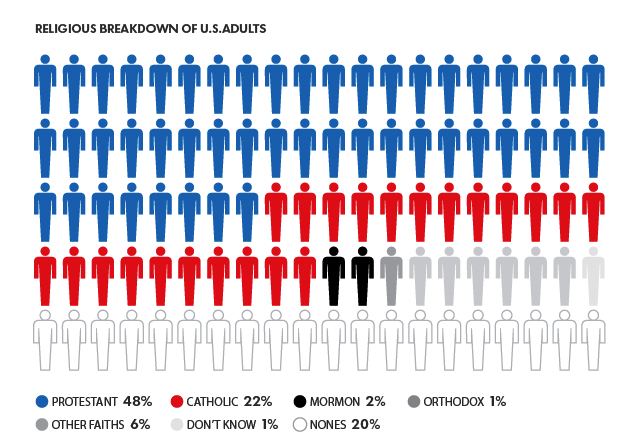
For the first time in U.S. history Protestantism (aka: anyone in the Christian tradition who is not Catholic) has fallen below 50%. The primary reason for this shift is the increase in those who claim no religion.

The Pew Forum on Religion & Public Life released an analytic study today titled, Nones on the Rise. It shows findings now that almost one in five Americans (19.3%) claim no religious identity. This is an increase from 15 percent in the last five years.

“Part of what’s going on here is that the stigma associated with not being part of any religious community has declined,” said John Green, a specialist in religion and politics at the University of Akron, who advised Pew on the survey. “In some parts of the country, there is still a stigma. But overall, it’s not the way it used to be.”

Here is an info graphic that uses a picture to show the breakdown of religious identity in America.


So why is this happening?

That is the big question. If I had a definitive answer I could write a best-selliing book and change the world. But until that happens, let me just postulate some brief observations from my ministry experience.

  1. Insincere faith will not pass down through the generations.  –  Teenagers and children know when something is really important to their parents. They can read between the lines and see the real motive of the heart. If church is just another activity in the week, or just a social outing, the children in that family will begin to take on that value system for themselves. God understood this and placed the responsibility firmly on the parents for a sincere faith. Deut. 6:4-7 says: Hear, O Israel: The Lord our God, the Lord is one. 5 Love the Lord your God with all your heart and with all your soul and with all your strength. These commandments that I give you today are to be on your hearts. Impress them on your children. Talk about them when you sit at home and when you walk along the road, when you lie down and when you get up.
  2. The next Generation does not understand the tenets of biblical faith.  –  If people think Christianity boils down to a list of rules (that didn’t really matter to their parents) they will discard it  as another social construct meant for control.  If they never grasp the reality of our spiritual condition and the hope of the Gospel and the life of purpose that flows from giving control to God, of course they will try to find a way on their own. If the bible was taken seriously this generation would see that it truly is a guide for life that works in today’s culture!
  3. Churches may become more concerned with entertaining it’s members rather than teaching the Gospel.  –  While I already submit that parents have the ultimate responsibility for passing on a sincere faith to their children, churches are there to support this process. In student ministry, the wrong assumption is that we are all about pizza and games. If that becomes the focus, you raise up a uninformed, spiritually weak generation. As that generation of church goers has become the leaders in churches, the emphasis is taken away from the Gospel and placed on being “cool”. When a rocking band and a preacher with tattoos (while these things in themselves are not wrong) are more important than solid doctrine, you can expect people to see through this shallow version of faith and either (1.) give up, claiming no religion, or (2.) church hop from one place to the next looking for the best entertainment.

May all of us; children, parents, and church members, reconnect with the truths of scripture and make it the authority in our lives. May our faith be sincere and evident to everyone who sees us. Only then would we begin to see a change in the negative spiritual trend now on us. God bring revival! Wake us up! But whatever happens, God be glorified. Remember the words of Habakkuk.

Habakkuk 3:17-19

17 Though the fig tree does not bud
and there are no grapes on the vines,
though the olive crop fails
and the fields produce no food,
though there are no sheep in the pen
and no cattle in the stalls,
18 yet I will rejoice in the Lord,
I will be joyful in God my Savior.

19 The Sovereign Lord is my strength;

    He makes my feet like the feet of a deer,
He enables me to tread on the heights.

God has a plan and we must trust in Him. Stay focused my friends. Your fellow worker in the field,  Adam.


See You At The Pole – 2012 – Awaken

This morning students around the country are gathering at flag poles on their school campuses. It is a morning to stand and be counted. A morning to lift up to our God prayers for our friends, family, schools, administration, teachers, city, state and national governments.

I will be spending my morning at Oakland Middle school where I am predicting 150+ students will gather in Jesus’ name to pray. It is an honor to stand among them.

Whether a single student standing alone, two or three huddled together in unity, or hundreds gathered in front of the school, See You at the Pole is about students praying for awakening on campuses all over the world.

The 2012 See You at the Pole theme is Awaken and the Scripture is Ephesians 3:14–21—“For this cause I bow my knees unto the Father… I pray that out of his glorious riches he may strengthen you with power through his Spirit in your inner being so that Christ may dwell in your hearts…And I pray that you… grasp how wide and long and high and deep is the love of Christ, and…that you may be filled to the measure of all the fullness of God. Now to him who is able to do immeasurably more than all we ask or imagine…’”

Pray for these teenagers today that as they take a stand on public property and exercise their religious liberty, they will be a light that points not tho their own spirituality or goodness, but to Jesus.  For He is the only hope for our schools, our nation, and our world.

To Him be the Glory this morning.

If you are reading this before 7:00am, hey, I’ll see you at the Pole!

Here are some quick links if you want to learn more about this national movement.

SYATP Frequently Asked Questions

SYATP.com

SYATP Store

Wiki write up on SYATP

Obsessed with Facebook – The Staggering Stats

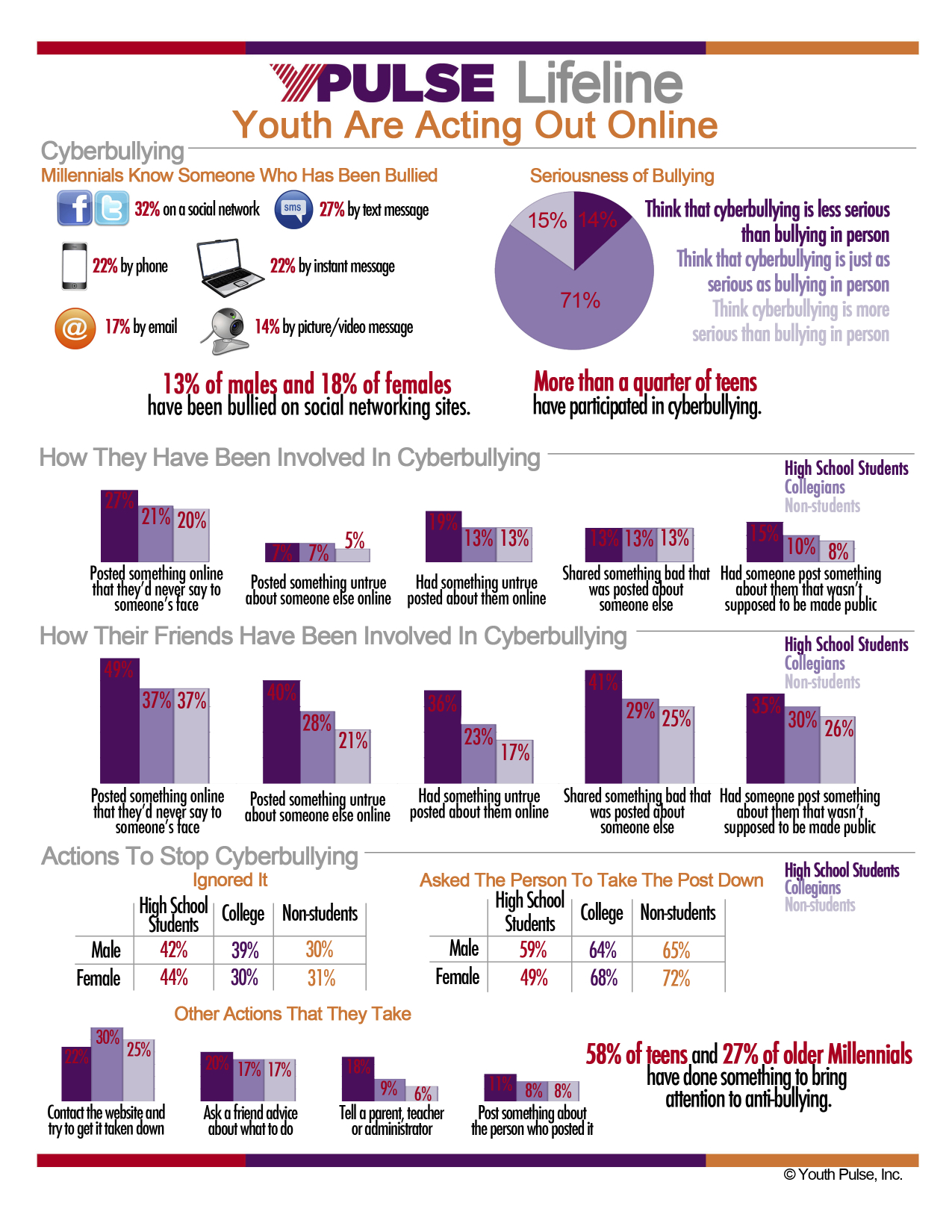
Cyberbullying: Stats About Youth Acting Out Online

Lecrae, TobyMac, Owl City: Christian Music Making Mainstream Waves


We all know that music is a huge influencer in the lives of teenagers. They live and breathe it. Here are some amazing artists who are rising to the top of their field, receiving recognition in both christian and mainstream venues. Check out this encouraging article I found.

***************************************************************

What an amazing 14 days!

Two weeks ago today, Owl City‘s new album “The Midsummer Station” released and immediately climbed to #1 on the iTunes album chart. Last week, tobyMac‘s “Eye On It” landed at #1 on that same chart, causing more than one music fan to scratch their heads and say “toby WHO?”

And then today, Lecrae‘s much anticipated (by me and a whole lot of other people) “Gravity” shot up the chart … as of noon it’s the #1 album on iTunes.

When stuff like this happens, I usually do one of two things: I get wrapped up in the excitement of it (I admit it, I kept checking iTunes every 30 minutes this morning watching Lecrae climb those last few spots to the top). Or, I write it off as “just numbers” (I’m a pessimist at heart).

But today I was really struck by how much of a God thing this is. Think about it. In the last two weeks, three incredibly talented artists — three believers who have followed a call to use their talents to glorify their Maker — have had their work showcased alongside Carrie Underwood, Maroon 5, One Direction, John Mayer … the “best” of pop music. People from around the world, not just those that regularly listen to or seek out Christian music, are being exposed to great music that was written to reflect the true Light into a dark world.

[check out this tweet by Lecrea]

#GodIsGood
But God isn’t always easy. Adam, tobyMac and Lecrae (and countless other artists, musicians and songwriters) spend weeks on the road away from family and friends, and long days (and nights) in the studio. But they keep doing it because they know it’s their gift. Their calling. Their platform. And landing on the iTunes chart isn’t about success; it’s about a bigger platform.

So thanks guys, for the great new music … and for the reminder that as Christ-followers we are all called to embrace our God-given talents, exercise our gifts and strive to use them to honor the One who gave them to us.

*********************************************************

Reblogged from Interlinc Music Resources. Thank you for this article Sheridyn Williamson and keeping us up to date in the christian music industry!

-Adam