Do You Know Which Worldview You Really Hold?

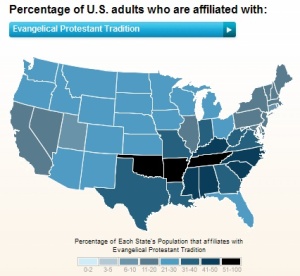
biblebelt

The southern region of the United States is known as the bible-belt. It is common for most people here (as I write in TN) to associate with some type of christian label. But does everyone who claims to be a christian really hold a christian worldview?

The short answer is no. But worldviews are complex.

What is a worldview you ask? A worldview is the filter through which you interpret the data of life. This filter is made up of your presuppositions, values, and answers to life’s most basic questions. We all have a worldview, the question is whether we intentionally established it, or allowed to haphazardly develop through time.

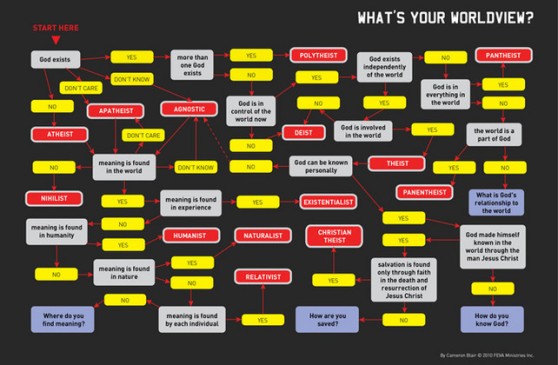
I believe many people call themselves “christian” because it is a culturally acceptable term (common, but not limited to the bible-belt), but if their belief system was truly examined another label may actually describe them better. This worldview flow chart is helpful to identify some of your own core beliefs to better understand which worldview you hold.

Track through this flow chart for a while and discover which worldview you operate under, as well as see how others may answer some of life’s most important questions. Click the chart to see a larger version. I hope this is helpful and informative. Let me know in the comments.   – Adam

Worldview-675


Bible Says: Teenagers need to SLOW DOWN!

sleepy

The idea of rest is maybe the last thing on a teenagers mind, but there is a biblical command for all of us to slow down and recharge. This can be wholly lost in the demands of a teen life filled with academics, sports practice, dating, family, not to mention church life. Here is a great article that all parents of teens need to read. Its provides some practical suggestions for raising a teen that understand the importance of slowing down. Read the original article HERE by Jen Wilkin, writing for The Gospel Coalition. I took the liberty of bolding a few things that jumped out to me. Read it!         -Adam

How to Guard Sabbath for Your Children

My oldest son started high school this fall. At his orientation the counselors spoke to parents about the greatest challenge they see students face in school. I expected to hear about poor study habits or substance abuse, but to my initial surprise, these were not at the top of the list. Apparently, the greatest challenge presenting itself in the office of the high school guidance counselor is a growing number of kids struggling with anxiety and depression. Can you guess why? A combination of over-scheduling and sleep deprivation, linked to two main contributors: electronics use and extracurricular activities. We were encouraged as parents to go home and talk to our teenagers about setting boundaries in these areas. Parents across the auditorium scribbled notes furiously as the counselors outlined some suggestions: limit texting, monitor bedtimes, cut back on team practices. I couldn’t help but think to myself: tonight there will be many demonstrations of teenage angst when mom shows up with her new list of suggestions.

What is unfolding at my son’s high school is a clear illustration of spiritual truth: the need for regular periods of rest in our lives. From the earliest pages of the Bible we find God instituting patterns of activity and rest—not just any kind of rest, but rest with the intent to engage in worship and community. The concept of Sabbath weaves its way through the Old Testament and the New, occupying a prominent place among the Ten Commandments and informing our understanding of heaven.

Despite biblical precedent, few Christians understand or practice Sabbath as a regular part of life, and consequently, neither do their children. Christian parents bear the responsibility of teaching our children the value of rest, through our words and through our actions. Children don’t set the calendar in our homes—if they are overscheduled or sleep-deprived, the fault lies with us. How can we better discharge our duty of raising children to seek Sabbath? To value down-time to reconnect with God and family?

While I admire the high school guidance counselors’ optimism, age 14 is probably too late to start imposing boundaries on our child’s rest habits and schedule. We need a plan, and we need it early. How will we safeguard for our families the key Sabbath concepts of rest, worship, and community? Here are a few suggestions that have helped our family to honor God in our rest.

Electronics

Late-night texting and TV watching, online chatting, surfing the internet—all can rob a child of rest. Children between the ages of 7 and 12 require a whopping 10 to 11 hours of sleep each night. This is the very age range during which most acquire the electronics to rob them of needed sleep. Parents can guard their children’s rest simply by keeping electronics in sight. We made a rule in our home that no electronics are allowed upstairs: no TVs, computers, phones, or games in bedrooms or rooms where their use cannot be monitored.

Each night, those of us who have phones leave them in a spot on the kitchen counter. These measures give us accountability to each other, keep electronics as a shared rather than an individual privilege, and force our electronics to obey our family’s Sabbath priorities of rest, worship, community. Well-rested kids bypass many of the unsavory habits of their tired counterparts: fits, backtalk, forgetfulness, drama, isolation, and yes—anxiety and depression. Guarding your child’s rest actually gives them a running start at Christlike behavior, even during adolescence.

Activities

So many to pursue, so little time. Don’t be fooled: the proliferation of activity options for children reflects our cultural affluence, not our child’s need to be well-rounded or socialized. Gobs of money are being made off of our misplaced desire to expose our kids to every possible talent path. How can we choose activities for our family in a way that doesn’t compromise Sabbath principles?

Because the four Wilkin kids are close in age, our schedule and finances forced us to limit activities to “one or none” for each child. Not all families need to impose a limit this low, but we have re-learned something our grandparents probably knew: children who participate in no organized activities at all still lead lives full of activity and joy. To many parents the idea of a child on no sports team, in no music lessons, at no club meetings is completely foreign and a little frightening. Won’t they get bored? Won’t they drive me crazy lurking around the house? Won’t they miss out on an NFL career and blame me? Or, my personal favorite: Won’t other parents think I’m a bad parent? I would answer all of these questions, “Maybe, but who cares?”

As is often lamented, parenting is not a popularity contest. With that in mind, here are some good (and highly unpopular) questions to ask when evaluating which activity to pursue:

  1. Does it sabotage weekend downtime or worship?
  2. Does it sabotage family dinners?
  3. Does it sabotage bedtime?
  4. Does it pull our family apart or push us together?
  5. Is it an activity my child can enjoy/benefit from into adulthood?
  6. Can we afford it?

Notice that “Does my child enjoy it?” is not on the list. So often I hear parents justify keeping a child in a time-sucking activity because “He loves it so much.” Kids love Skittles and Mario Kart so much, but they don’t get to decide if, when, and how much to consume. Because children possess a limited range of life experience, it is difficult for them to conceive of happiness outside their current circumstance. It is our job to help them learn.

Less-than-Admirable Motives

Why do we have such a hard time as parents placing limits on electronics and activities? Both can appeal to parents for less-than-admirable reasons. Both can serve as a babysitter or a diversion. But the appeal of activities extends even further, to our very identity as parents. We actually want to be labeled “soccer mom” on rhinestone-studded tee shirts and coffee mugs. We carefully arrange our car decals so that every identity-marker is announced. The thought of removing or withholding our child from an activity threatens the very way we view ourselves.

Maybe our view needs to adjust to something a bit higher. Families that prioritize Sabbath fix their eyes on and find their identity in Christ, recognizing that their greatest potential for missed opportunity lies not in neglecting activities but in neglecting time—lots of it—spent together as a family in worship, rest, and community with each other.

God forbid we value the discipline of a sport more than the discipline of Christian living. Both require great application of time and effort, but one is worth far more than the other. Because time is our most limited resource, how we allocate it reveals much about our hearts. Our time usage should look radically different than that of the unbelieving family. We must leave time for slow afternoons, for evening meals where we pray together and share our faith and struggles, for Sunday mornings of shared worship.

God ordains Sabbath for our good and for his glory. May our homes be places where Sabbath rest is jealously guarded, that in all things God might have preeminence—even our schedules.

Ephesians 5:15-17: See then that you walk circumspectly, not as fools but as wise, redeeming the time, because the days are evil. Therefore do not be unwise, but understand what the will of the Lord is.
Premier Family Guidance for Less than the cost of a Soda

My recommendation is to skip buying that $2.50 soda at the restaurant today, get a water, then click one of these links and get a book that can add some eternal value to your family, rather than just empty calories to your diet.

Today I have come across some Kindle Deals on three fantastic books that can change the way you approach child rearing. These books all come from a thoroughly biblical perspective and I believe create the best way to raise you children.  I paid full price for these back in the day…sheesh…but you can get a great deal if you check it out today.

____________________________________________________________________

Shepherding a Child’s Heart – by Tedd Tripp – $1.99

“With the plethora of material on parenting and the family, it is inspiring-and distressing-to see how few books are genuinely biblical. Here is a refreshing exception. Tedd Tripp offers solid, trustworthy, biblical help for parents. If you are looking for the right perspective, and practical help, you won’t find a more excellent guide.” -Pastor John MacArthur

Instructing a Child’s Heart – by Tedd and Margy Tripp – $1.99

“This is not a book that tells you how to control or manipulate your children so that they will spend their lives living in an irrational fear of a domineering parent or a hostile deity. Instead, it is a book that teaches parents to gently but consistently build into children a worldview that begins with the heart and that focuses on God and on His glory. “We should impress truth of the hearts of our children, not to control or manage them, but to point them to the greatest joy and happiness that they can experience–delighting in God and the goodness of his ways.” We’ve waited a long time for the follow-up to Shepherding a Child’s Heart. I believe most parents will feel the wait has been well worth it.” -Tim Challies, Author

Adopted for Life – by Russell Moore – $3.03

“Yes, yes, yes! Russell Moore has given the church a God-centered, gospel-saturated, culturally-sensitive, mission-focused, desperately needed exploration of the priority and privilege of adoption. He exposes misconceptions and uncovers misunderstandings that not only keep us from fostering an adoptive culture in our churches but that keep us from truly understanding the gospel by which we are adopted as sons and daughters of God. This book contains encouragement for children who have been adopted and the parents who’ve adopted them, practical advice for parents who are considering adoption and parents who have never considered adoption, and admonishment for the church-at-large to consider how to be obedient to scriptural commands to care for orphans here and around the world. Readers will find themselves laughing on one page, crying on the next, and ultimately bowing before God, thanking him for adopting them into his heavenly family and considering how to show his love to the fatherless on earth.”
David Platt, Senior Pastor


High School Students Show Off Really Bad Writing Skills

So I’m not claiming to be much better, but I’d like to think I have a bit more skill than some of these students. Some may think this is a sign of the times, and to a small degree it may be. But for the most part I post this just for a light hearted laugh. I’m product of public schooling myself, so no stone throwing here.

🙂 Hope you enjoy reading these like I did (…and you go home and encourage your teenager to study hard in English class so they don’t end up in a list like this!)  – Adam

It’s a Boy! Welcome Silas Abram Lickey!

Yesterday at 9:53am another blessing entered into my life. Silas Abram Lickey was born healthy and loved. As I’m sure you’ve noticed, my blogging has been somewhat slim lately. That is because family is way ahead of blogging on the priorities list.


I have sat here in the hospital the past 24 hours and thanked the Lord for another wonderful son. Many people have been freaked out by the thought of four children, 6 years old and under. I look at our bustling family and cannot see beyond the lavishing of grace God has given to me and my beautiful wife to live with such blessings.  Sure it’s hard at times, but the love and joy totally outweigh the sacrifice.

While little Silas is totally unaware, he is loved. Yet many children go  without such unconditional, immediate love. Holding this little life in my hands I think about the many lives lost each day in the United States due to abortions.

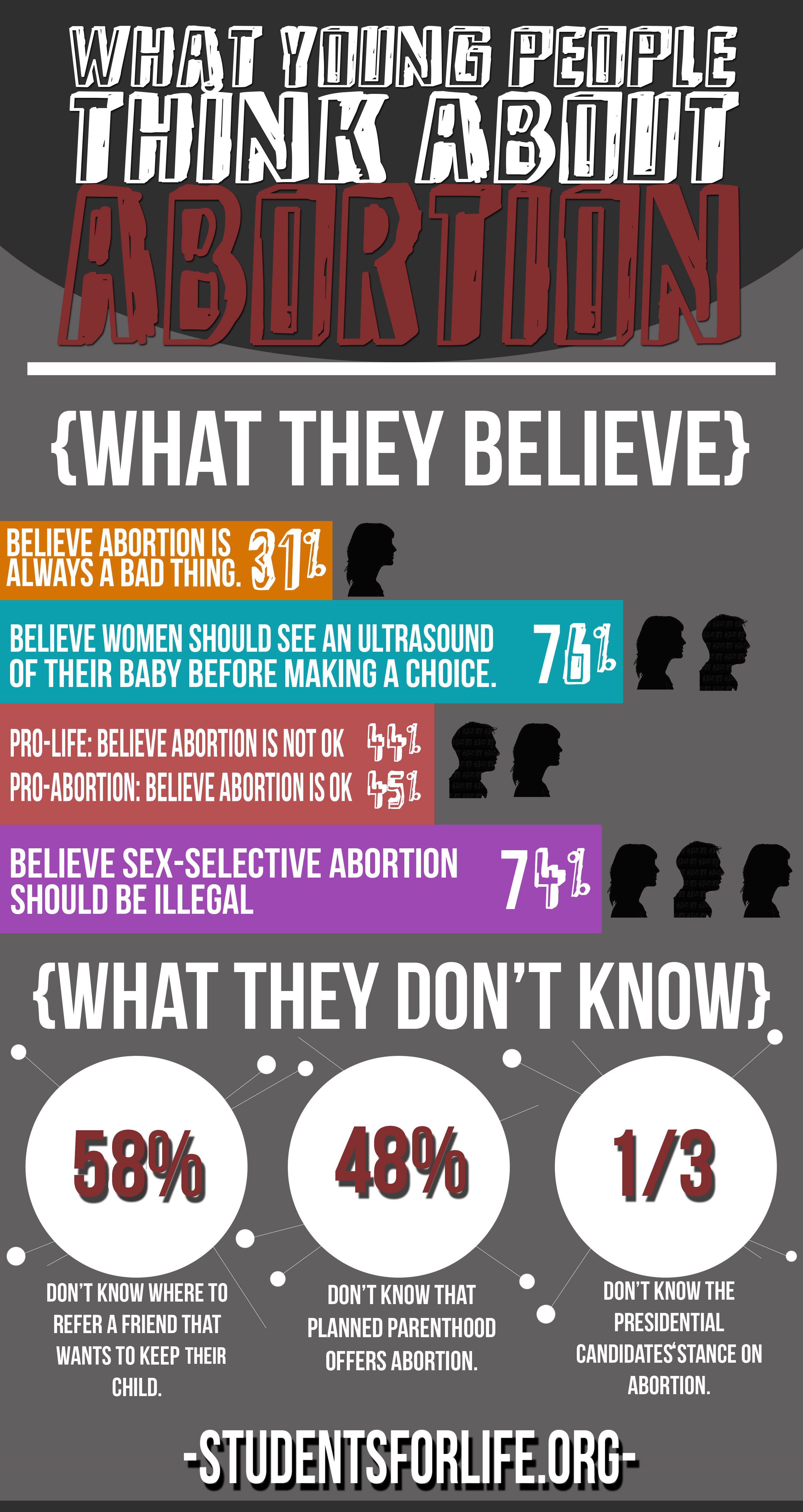
Here is an infographic about the young adult perception of abortion. Since I work with teenagers all the time I thought this was particularly a good question. “What do young people think about abortion vs the standard cultural position?” It is equally telling what the “don’t know” as it is what they do know.

All I know, confirmed with Silas snoozing here next to me, all life is precious.

Two FREE Books – Today only!

Here is something to brighten your day. Jump on Amazon and get some free books that are as good as it gets. Jerry Bridges and R.C. Sproul write books that bring us to the truth with amazing insight and passion. Free is the right price, so this is a no-brainer. These are Kindle downloads so you can have the e-book instantly on your device or computer as a resource. Go get them today!

Trusting God: Even When Life Hurts.by Jerry Bridges – (I have personally owned this one in paperback for many years and fully recommend it for anyone facing life struggles or tragedy.)

In an effort to strengthen his own trust in God during a time of adversity, Navigator author Jerry Bridges began a lengthy Bible study on God’s sovereignty. The revelations changed his life. In Trusting God, he shares the scope of God’s power to help you come to know Him better, have a relationship with Him, and trust Him more—even when unjust things happen. Tragedy, grief, loss, and death are part of life. Discover how Trusting God can reveal biblical truths about God. Includes bonus chapter taken from More Than Ordinary by Doug Sherman. (Amazon book description)

God’s Love: How the Infinite God Cares for His Children. by R.C. Sproul –  Love has come to mean many things. It’s used to describe emotions. It’s the glue for relationships. It frames countless stories. And the greatest of these stories opens before time began and echoes throughout eternity. It’s the story of God’s unrelenting, overwhelming love for His people. Yet the truth of love is even more majestic, more staggering, and more extraordinary than we can understand: God doesn’t just love us. He is love.

 Renowned theologian and teacher Dr. R.C. Sproul takes a remarkable look at this most profound truth. God’s Love delves deep into Scripture to explore this dynamic attribute of God, which finds its ultimate expression in His Son. Dr. Sproul also examines seeming paradoxes of God, such as a loving God and divine hate, and how love coexists with His sovereignty. Practical, insightful, and revolutionary, God’s Love compels and calls us to reflect His nature of unconditional love.
I hope you enjoy these books and are encouraged in your walk with Christ!
-Adam

Train Up the Next Generation

Here is a fantastic article focused on a glaring deficiency among pastors, and really all believers. We can get so fixed on running “my race” for God in the day to day grind that we forget there is a biblical mandate to guide the next generation into maturity. If we don’t do it who will?

Writing for DesiringGod.org, Mike Bullmore posts “Brothers, Train Up the Next Generation” as a reminder to this very fact.  Check out the article to get a great perspective of the need and solution.

Here are his main points, but go read the full article:

  1. Disciple Faithful Men: Paul is used as a rubric here. Do you have a Timothy?
  2. Beware the Hezekiah Syndrome: After God grants 15 years of “added” life to the sick king, he goes off and parades Israel’s riches before Babylon, Isaiah prophecies coming captivity, but Hezekiah is content that there will be peace in his lifetime. (aka, sorry next gen, but at least I’m ok.)
  3. Avoid Temporal Shortsightedness: it is easy to think only about the here and now, but the coming glory is always a key element in biblical living.
  4. Cultivate a Far-seeing Vision: Contrast Hezekiah with Paul. It take intentionality and devotion, but it is our responsibility.
  5. Invest in the Next Gospel Generation: 1) be personally devoted to Gospel ministry, 2) Notice those who rise to the top, 3) create context for youth to “practice” handling the Word, 4) Pray intentionally for God to raise up passionate hearts, pray for your replacement.

Who Actually Votes in America – Infographic

A Prayer for America on Election Day

Al Mohler published this article “A Prayer for America on Election Day”. It is ten prayerful points that shine light on the fact that America’s problems are rooted in the spiritual realm, not the physical or governmental.

Here is a brief synopsis of his ten points.(but read his full article, which has a fuller treatment of each point.)

  1. First, we should pray that God will bless America with leaders better than we deserve.
  2. Second, we should pray that Americans will be motivated to fulfill the responsibilities of citizenship, yet also that we will be stripped of an unhealthy and idolatrous confidence in the power of government to save us.
  3. Third, we must pray that Americans will vote by conscience, not merely on the basis of celebrity or emotion.
  4. Fourth, we must pray that Americans will vote to defend the least among us — and especially those who have no vote.
  5. Fifth, we should pray that God will prick the conscience of the nation on issues of morality, righteousness, and respect for marriage as the central institution of human civilization.  There is much work to be done, and so much is at stake.
  6. Sixth, we should pray that God will protect these candidates and their families.
  7. Seventh, we should pray that the election is conducted with honor, civility, respect, and justice. May there be a clear winner, not a contested result.
  8. Eighth, we must pray that Americans will be prepared to accept the results of the election with respect and kindness.
  9. Ninth, we should pray that this election would lead to even greater opportunities to preach the Gospel, and that the freedom of the church will be respected, honored, and protected.
  10. Tenth, we must pray for the church, praying that the church of the Lord Jesus Christ would be strengthened in the truth, grounded in the faith, and empowered for witness and ministry.